THE Philippine Coast Guard (PCG), alongside local government units and environmental partners, spearheaded a series of multi-agency river clean-up operations along the Pansipit River in Batangas from September 8 to 15, 2026, to mitigate flood risks brought by the Southwest Monsoon (Habagat).
The localized clearing operations targeted dense accumulations of water hyacinths, aquatic vegetation, and floating debris along critical stretches of the river in Agoncillo and Lemery.
The Pansipit River serves as the sole drainage outlet connecting Taal Lake to Balayan Bay, making its continuous flow vital to preventing water levels from rising dangerously in lakefront communities during periods of heavy rainfall.
On September 8, personnel from Coast Guard District Southern Tagalog and its substations in San Nicolas, Agoncillo, and Lemery launched immediate operations in Brgy. Pansipit, Agoncillo.
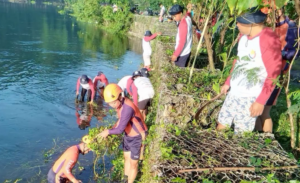
The task force was supported by the Philippine National Police, Bureau of Fire Protection, local disaster offices, barangay officials, and beneficiaries of the Department of Labor and Employment’s Tulong Panghanapbuhay sa Ating Disadvantaged/Displaced Workers

Efforts intensified on September 14, when CGSS Lemery and the Lemery Municipal Environment and Natural Resources Office (MENRO) cleared a 60-meter section of the riverbed in Brgy. Palanas.
The following day, September 15, a major joint operation in Brgy. Pansipit successfully cleared roughly one kilometer of the waterway, removing approximately four dump truck loads of trapped vegetation and waste materials.
Collected debris was safely disposed of along designated areas of the riverbed to ensure it would no longer obstruct the natural water current.
The PCG and its sub-stations continue to monitor the water level of Taal Lake and the condition of the Pansipit River in close coordination with local environmental offices and municipal authorities.
Through these sustained clean-up drives, the PCG reaffirms its commitment to environmental protection, proactive disaster risk reduction, and safeguarding coastal communities from severe seasonal flooding.